
Wastewater Modeling
Biowin Modeling
Biological process modeling can be used to: simulate the performance of a wastewater treatment plant, predict potential effects of operational changes such as placing unit processes in and out of service or changing sludge age, or to evaluate the relative effectiveness of different facility upgrades. It is a low-cost way to make virtual changes without the risk of causing a process upset or violating permit limits.
Modeling can help identify process bottlenecks because it looks at the treatment plant as a whole rather than taking each unit process separately. In modeling, changes to one unit process will necessarily affect other unit processes, just like a real treatment plant.
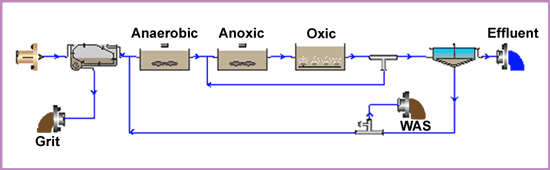
Indigo Water Group uses BioWin modeling, State Point Analysis, and empirical fixed film models to simulate removal of traditional pollutants and nutrients. We’ve performed process modeling for a variety of clients including the City of Northglenn, the Town of Carbondale, and Leprino Foods Company. We’ve reviewed process models created by other consultants for the City of Boulder and Colorado Springs Utilities. Depending on your needs, we can perform simpler steady state modeling or evaluate dynamic systems with diurnal variations in flow and concentration.
Collection System Modeling
Collection system models allow a municipality to estimate collection system capacity, locate areas with the potential to surcharge or clog, and to assess the impact of new businesses and residences on existing infrastructure. Future scenarios can be explored based on land use designations and future interceptors tentatively planned. Once completed, a sewer model can also be used to track infrastructure age, track operations and maintenance activities, and to coordinate a planned replacement program of aging infrastructure. Centralizing this type of information can help to avoid costly infrastructure failures and assist municipalities with their budget process.
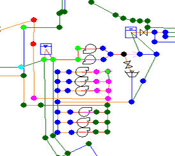 Indigo Water Group is experienced with MWHSoft H2OMap Sewer. Our staff recently completed collection system models for the Cities of Thornton and Northglenn. For Thornton, we evaluated four different future scenarios in addition to building an accurate representation of the existing collection system. For Northglenn, we entered every pipe and manhole in the entire system — over three thousand of each! Modeling every aspect of the collection system will allow the City to link their maintenance database and other GIS information directly to the model.
PROJECT HIGHLIGHT
Indigo Water Group completed collection system models for the City of Brush and the Meeker Sanitation District. Brush’s model includes every pipe and manhole in the system – roughly 1,000 individual model components.
System information such as the manhole rim elevation, pipe diameter and condition, and pump station operating data was used to estimate hydraulic capacity and find potential problem areas. The City will use the model to track asset information such as last cleaned date, pipe material, and condition notes.